

The short answer
Software can support reliable delivery when it reflects a sound operating design. First establish how work should move, what releases it and how disruptions are handled. Those decisions provide a practical basis for selecting or configuring the technology.
Design the flow before configuring the software
A software change is often prompted by a delivery problem: work waits between departments, priorities change repeatedly or nobody can see what is late. Technology can make information easier to access, but the operating decisions still need to be made.
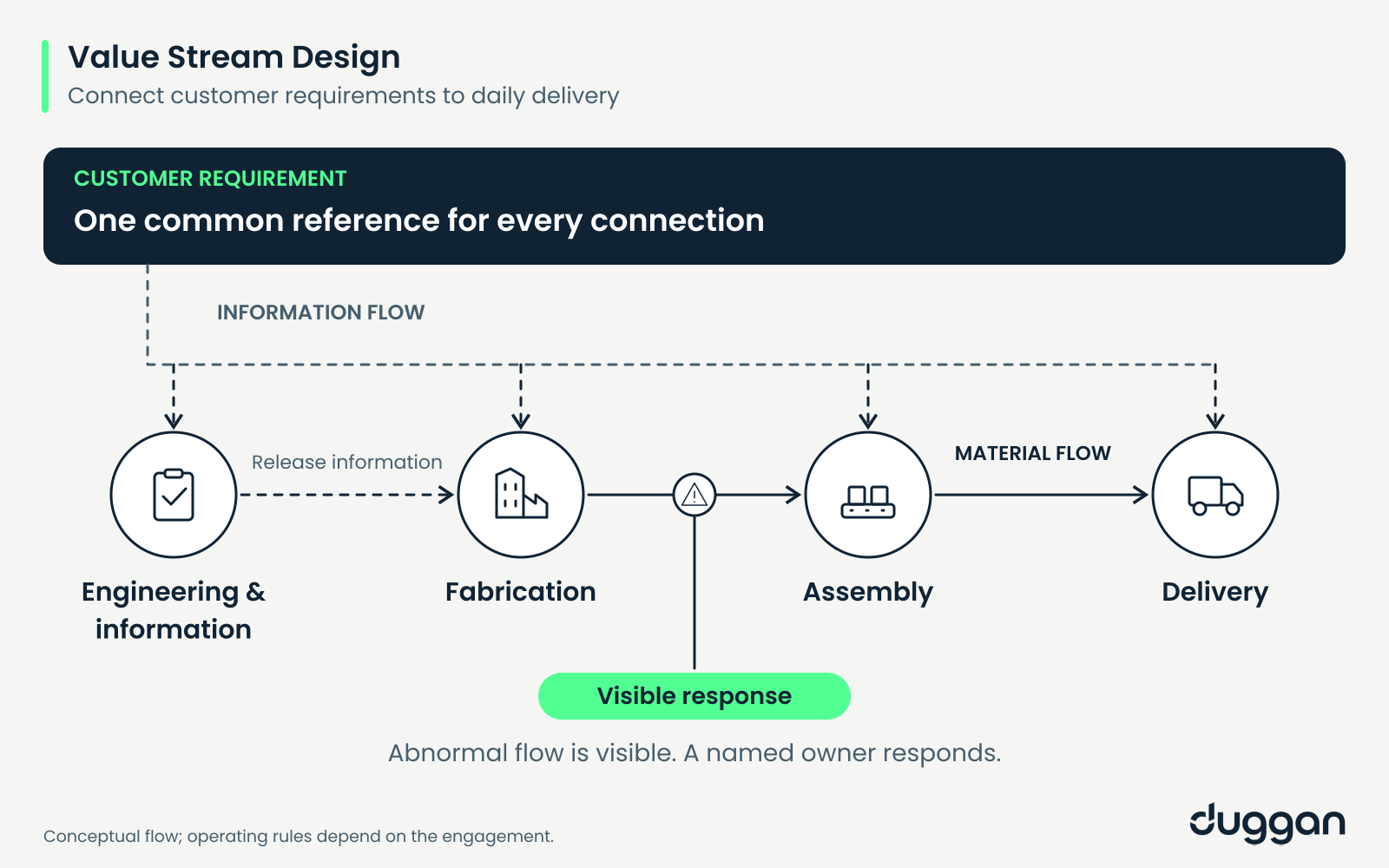
Define how work should enter the process, what makes it ready, which work moves next and how people respond when the expected flow is disrupted. Those rules establish what the software needs to support.
When should operating design happen?
Begin the flow-design work before locking in configuration decisions wherever possible. If a platform is already in use, examine how its workflows and signals support the intended operation. An existing system does not prevent useful design work.
The practical question is whether the configured process reflects how customer value should flow. Software selection, technical integration and information-security requirements remain separate considerations to resolve with the appropriate specialists.
Design the human interaction
Notifications only help when people know when to act, what to do and how to recognize a problem. Define the interaction at the handoff rather than relying on an alert to create discipline.
- What makes a piece of work ready for the next person or process?
- How is the next item selected, and what prevents constant reprioritization?
- How does a person see whether the flow is on time?
- What response is expected when information, capacity or an approval is missing?
Where Duggan fits
Duggan designs the operating flow and teaches the principles people need to use it. That can inform workflow requirements, visual signals, handoffs and standard responses before a system is configured or changed.
The relevant engagement starts with a customer delivery path and its constraints. Practical outputs can include a future-state flow design, operating rules and an implementation plan. The scope should make clear who owns the technology work and who owns the operating change.
What to measure
Measure the customer outcome and the flow: lead time, delivery reliability, work waiting between steps and the frequency of intervention. A successful launch or more frequent use of the platform does not, by itself, establish that delivery has improved.
Apply this to your operation
Identify one handoff where work waits or gets reprioritized. Clarify the operating rule and ownership before assuming that a new system feature will resolve the delay.
Explore the relevant Duggan service →