
Long lead times, growing work in process and constant expediting often arise between processes. Duggan works with your team to design how work moves from customer request to delivery, including mixed-model production and shared resources. The future-state design gives implementation a defined destination.
Greater than 30% faster lead times
Up to 50% reduction in required floor space
98%+ on-time delivery to the customer
Value Stream Design
Each stage answers a different question. A useful map becomes the starting point for decisions and implementation.
See the processes, queues, material and information connections that influence customer delivery.
Define process connections, the scheduling point and operating rules around product mix and demand.
Connect education, actions and ownership with the future state rather than isolated improvements.
Make the expected condition visible, recognise a deviation and follow an agreed response or escalation.
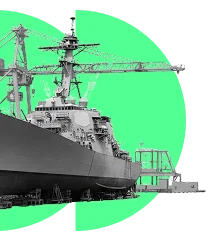
A large, vertically integrated naval shipbuilder needed to become a “preferred supplier” to its government customer.
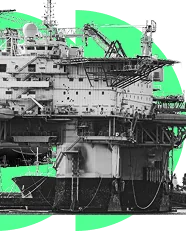
A leading industrial manufacturer, supplying the Energy and Oil & Gas markets, faced stalled growth despite years of efficiency projects.
You can be the leanest company on earth and still go broke if you aren’t focused on leveraging lean to grow your business. To grow your business means you have the capacity for innovation, acquisition and new products while consistently delivering on time to your customers.
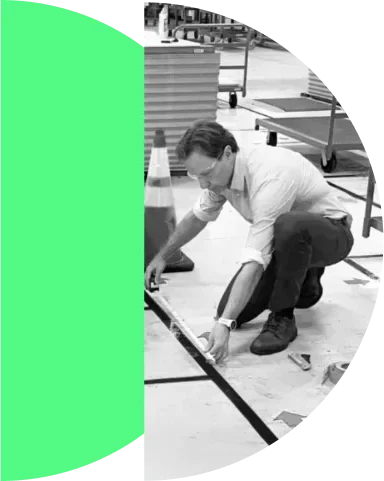
Process connections, scheduling and response rules need to support the delivery commitment. The design makes those relationships explicit so the team can see when work departs from the intended flow.
Work often spends time waiting between processes. Depending on the operation, single-point scheduling, continuous flow and first-in-first-out connections can help manage those queues. Evaluate the design against your demand, constraints and baseline.
Normal flow describes how work should move under the design’s operating conditions. Make the sequence, timing and process connections visible so employees can recognise a deviation.
Abnormal flow includes conditions such as missing parts, an equipment failure or a changed demand pattern. Define a response, an owner and when escalation is needed. The aim is to resolve problems close to the work while protecting customer delivery.
The design, implementation and team education connect through the eight principles below.
Value Stream Design
How the approach works, and what it means for your operation.
It defines how material and information will move through your operation to serve customer demand. The future-state design gives the team a destination for implementation.
A current-state map describes today’s operation. Design establishes how it will work in the future, including the connections between processes and the rules that support flow.
A local improvement can shift a problem downstream. An end-to-end view connects process decisions with delivery performance across the whole operation.
The design makes normal and abnormal flow visible. Standard work gives employees a defined response when conditions depart from the design.
We combine education with hands-on work alongside your team. The aim is to build the capability to implement, operate and sustain the future-state flow.
Tell us where delivery is falling behind, lead times are growing or work is getting held up between processes. We can discuss how your products, customer demand and material and information flows shape an end-to-end value stream design.
This form isn't loading.
Email thealey@dugganinc.com or call +1 (401) 601-7286 and we'll respond within 2 business days.
This form isn't loading.
Email thealey@dugganinc.com or call +1 (401) 601-7286 and we'll respond within 2 business days.