Large stationary assemblies

Design flow around large, complex assemblies

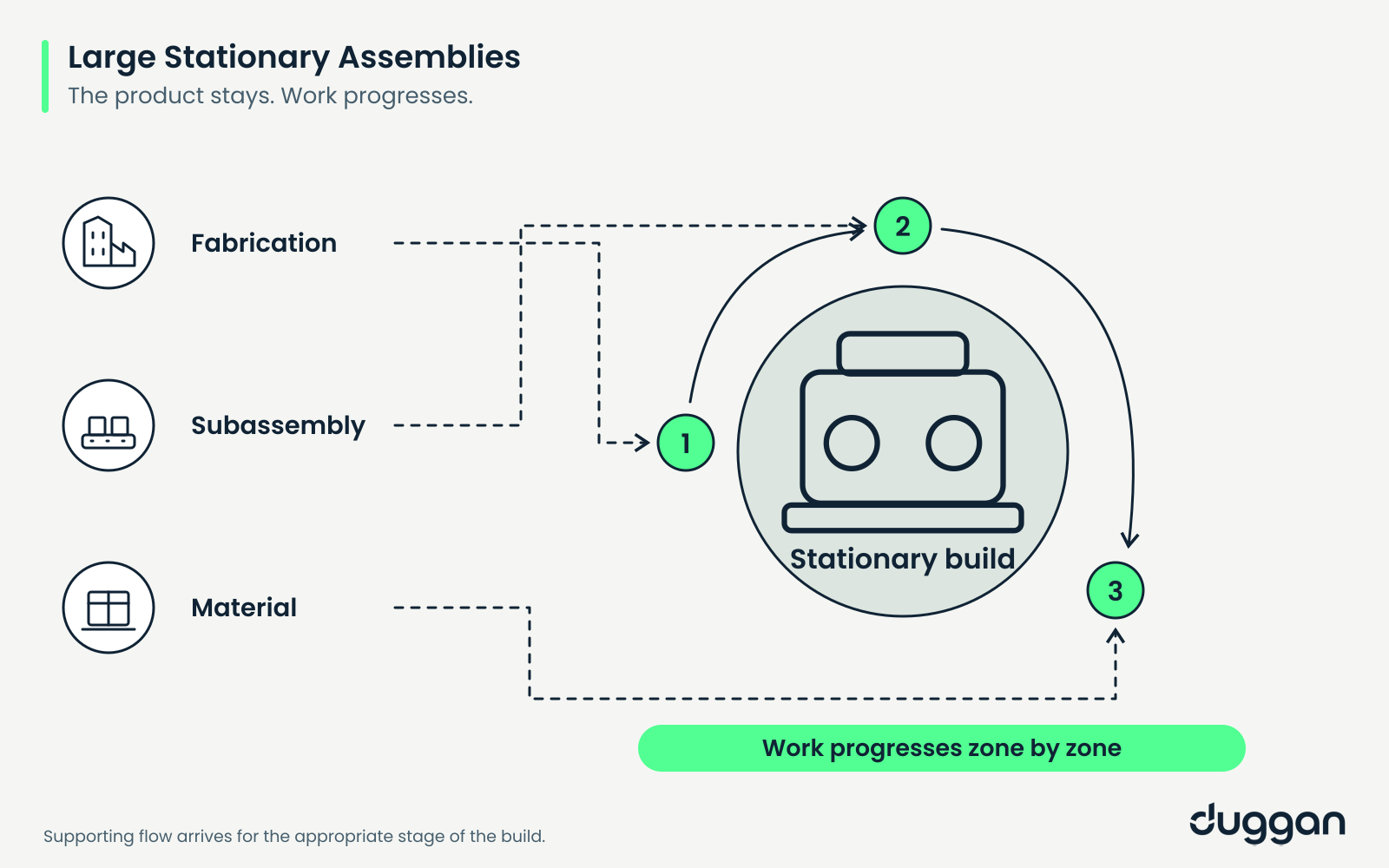
A vessel, rail vehicle or large piece of equipment can stay in place while work, parts and information flow around it. Duggan connects that sequence with fabrication and supporting operations so progress and interruptions become visible.

What makes the Duggan approach different

Flow without moving the whole product

The operating design connects the sequence of work with the arrival of people, material and information. Physical movement of the finished product is not a prerequisite for flow.

Supporting work tied to assembly needs

Fabrication, subassemblies and suppliers are connected to the main build through defined handoffs and timing. Shared resources are considered as part of that system.

Progress visible over a long build

Make the expected condition clear at useful intervals, even when completion takes weeks or months. A departure from that condition should lead to an owned response.

Education connected to implementation

Leadership education establishes the destination; practical design training and hands-on support help the workforce build and use the system.

Fabrication, subassemblies and materials arrive in sequence around a stationary build.

From the first conversation to daily operation

  1. Plan the transformation

    Establish the assembly challenge, customer requirement and scope. Leadership education creates a shared understanding of the operating destination.

  2. Design assembly and support flow

    Connect the main build, fabrication and subassemblies. Apply mixed-model and shared-resource methods where the work requires them.

  3. Make the work visible

    Define expected progress, readiness, handoffs and responses to disruption across the sequence.

  4. Implement with ownership

    Use a detailed plan and practical education to bring the future state into daily work. Review changes against the intended flow.

What the engagement can produce

  • A future-state flow design for the assembly and its supporting operations.
  • Defined connections between fabrication, subassemblies and the main build.
  • Visual operating conditions and response pathways for interrupted flow.
  • A sequenced implementation plan and practical design education.
  • Implementation support agreed around the work and available capacity.

The proposal establishes the deliverables, boundaries and responsibilities for your assembly environment.

An example from naval shipbuilding

Engagement example

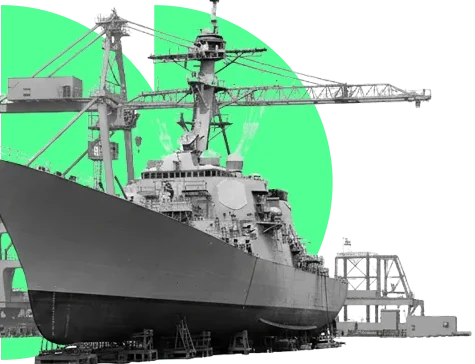
Naval shipbuilding: connect the work at the vessel

Pre-outfit, fabrication and warehousing were designed as one operating system, with visible handoffs and defined responses.

The published account reports more predictable execution and less reliance on daily oversight meetings.

Read the case study →

Examples relate to the stated engagements. Outcomes depend on the starting conditions, scope and implementation.

Experience in complex operations

“He demonstrates a very high level of competency in all things lean and operational excellence.”

John Boyd, referring to Kevin Duggan — published testimonial

Reliable delivery creates room for growth

When people can see work moving and respond to interruptions, fewer daily decisions need to return to management. Operational Excellence creates capacity for leadership to work on customers, new products and growth—what Duggan calls working on Offense.

For operations leaders

Connect priorities, handoffs and responses around the customer commitment. Assess progress through delivery, lead time, work in process and recurring interruptions.

For business leaders

Understand what the operation can support as demand, product mix or capacity needs change. Use that clarity to make growth and investment decisions.

Questions about the engagement

Can work flow when the product stays in one place?

Yes. Flow can be designed around the work sequence and the arrival of people, material and information. The assembly does not need to move down a conventional production line.

Does this apply to builds lasting weeks or months?

Long lead-time assemblies are a focus of this service. The design gives people a visible sequence and a way to understand progress toward the customer commitment.

How do supporting shops connect to assembly?

The design establishes handoffs and turnaround requirements between the main assembly and fabrication, subassembly or shared processes. Readiness and departures from the expected condition become visible.

Which industries are relevant?

Applications include marine, rail, aerospace, defense and oil and gas equipment. The design reflects the product, supporting operations and delivery requirements.

How long will the engagement take?

The number of assemblies, supporting value streams and implementation requirements determine the scope and timing. The initial conversation establishes an appropriate starting point; there is no standard duration for every build.

What should we bring to the first discussion?

Describe the product, build duration, customer milestones and where progress is being interrupted. Missing material, late supporting work and repeated rescheduling are useful examples to discuss.

Let’s discuss your assembly flow

Tell us what you build, how long it takes and where parts, information or supporting work hold up progress.

The first conversation helps establish the operating need and the right next step. Use the enquiry form below, or call +1 (401) 667-7299.

Let's talk about
your large stationary assemblies challenge.

Let's talk about
your challenge.