

The short answer
High-performance operations need a defined future-state flow and people who understand how to run it. Duggan combines design, practical education and implementation support so the operating capability can remain with the business.
Start with a defined operating destination
High-performance operations need a clear picture of how work should reach the customer. For Duggan, the destination is Operational Excellence: employees can see the flow of value and respond when it is disrupted.
This makes the goal practical. People need to understand what should happen next, whether work is on time and what to do when the expected condition changes. That is the foundation for dependable execution and less repeated management intervention.
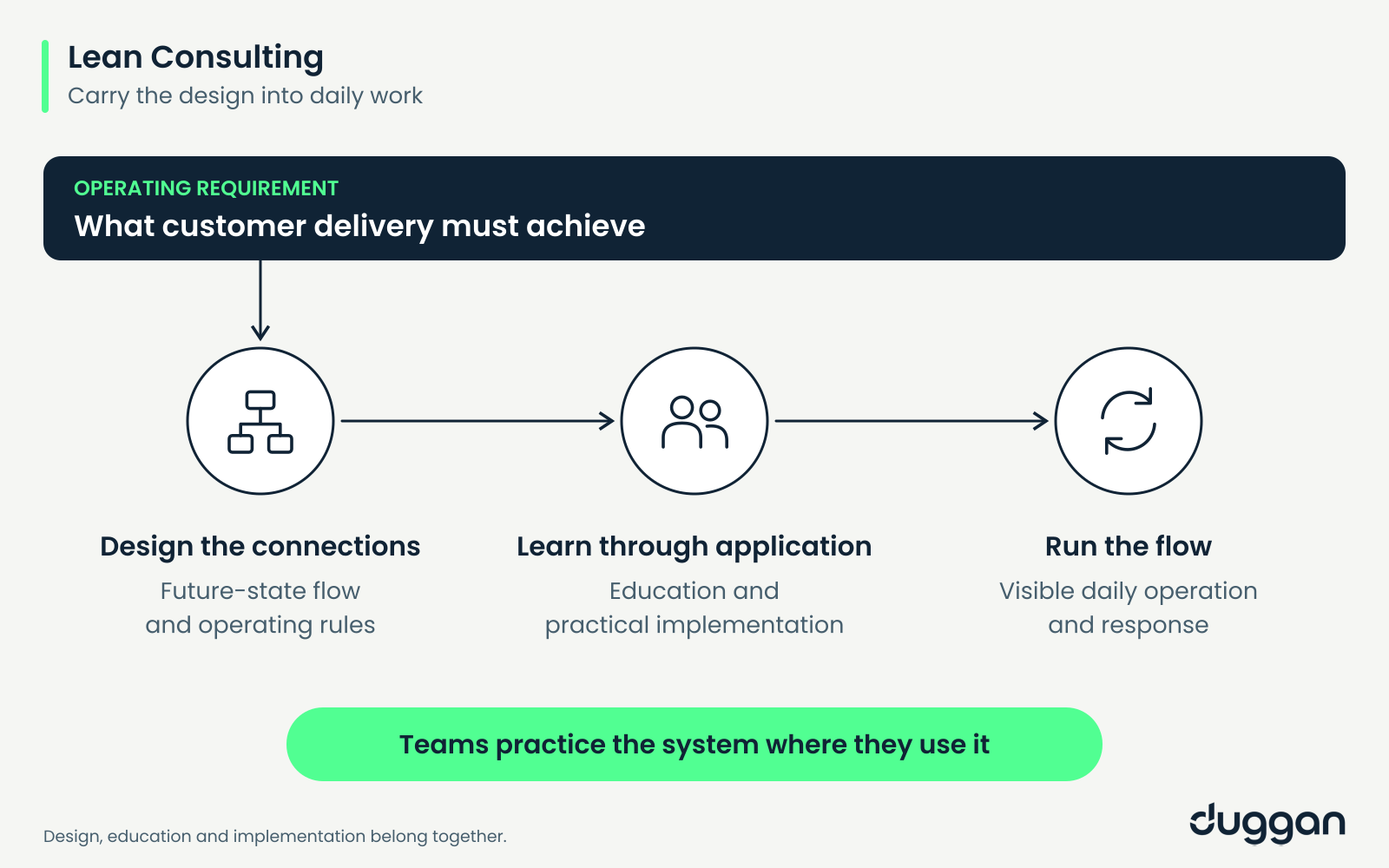
Design the connections
Product families, demand, work content and shared-resource capability shape the future-state design. The work connects processes across a customer delivery path, including information and supporting functions where they determine readiness or timing.
The same principles can apply in manufacturing and office operations, but the detailed design must reflect the actual work. A high-mix fabrication environment, an aircraft check and an engineering approval process do not need identical solutions.
Teach people how to use the design
Duggan combines formal education with practical application. Leaders learn how to guide the change; employees learn how the operating connections work and how to recognize normal and abnormal flow.
Learning is tied to the operation being designed. The aim is that people understand why a signal, sequence or response exists, so capability remains with the business after external support reduces.
Turn the design into daily practice
A useful engagement produces a future-state design and a practical implementation plan. Responsibilities, priorities and measures should be clear. Support can range from periodic coaching to more intensive on-site implementation, depending on the scope.
- Start with the operating challenge and agreed customer requirement.
- Define the future-state flow and the responses needed to run it.
- Connect education with implementation responsibilities.
- Review whether the design is being used and whether the agreed performance measures are changing.
Connect operating capability with growth
More dependable execution can create time for customer development, new products and other growth activities. Duggan calls this working on Offense. Releasing time is only part of the opportunity: leadership also needs a deliberate plan for how to use it.
The outcome should be judged against the engagement’s baseline and scope. A specific value stream may need shorter lead time; another operation may first need clearer readiness and fewer recurring disruptions.
Apply this to your operation
Begin with the customer requirement, the value stream and the people who will own the work. Ask what design, implementation plan and learning are needed to make the change sustainable.
Explore the relevant Duggan service →